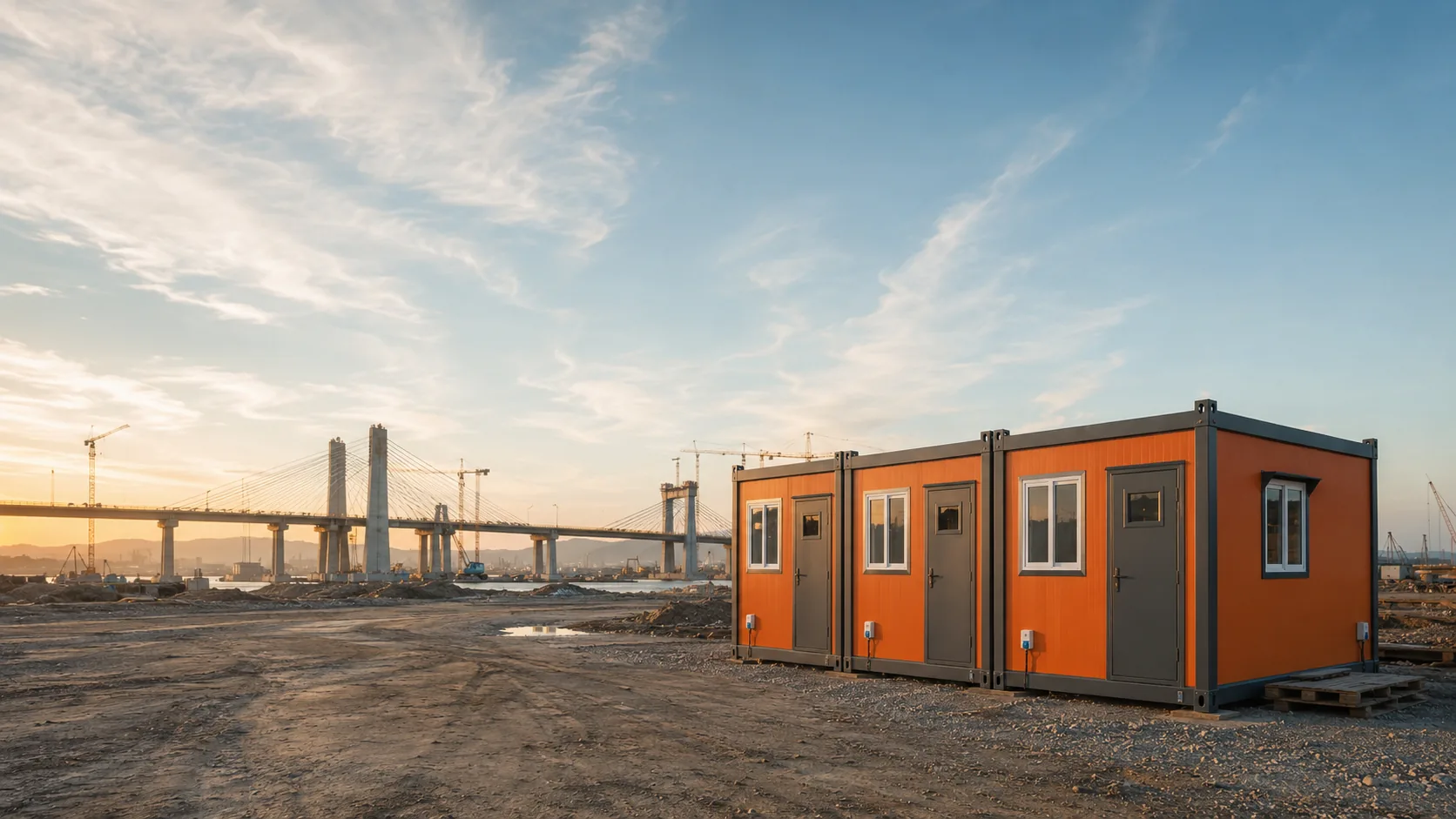

A practical decision guide comparing monoblock, demountable and Metropol containers across installation, logistics, reuse, architectural identity and whole-life value. Rather than offering a quick product summary, this guide explains the relationships between use, site, logistics, comfort, maintenance and acceptance behind the decision. Each section defines the need, identifies a common risk and sets out a practical control and site scenario.
Dimensions, materials and price matter in modular construction, but none is sufficient alone. The same floor area can require a completely different plan, envelope and service strategy for another user or climate. Recommendations should therefore be verified by the qualified architectural, structural, fire, energy, electrical and mechanical teams responsible for the project.
Selection starts with the brief, not the product name
A sound container decision begins with a brief that states who will use the building, for what purpose, for how long and under which site conditions. Treat this not as an isolated specification line but as a decision within container selection guide: monoblock, demountable and metropol systems that affects budget, programme, user experience and continuity of operation. A useful review describes today’s requirement while making future capacity, maintenance access and real site routines visible. The first plan then becomes a shared reference between design, manufacture and use, allowing every party to work toward the same outcome rather than a different assumption.
Selecting only by floor area hides circulation, storage, wet-area, service-access and future-expansion requirements. The issue is rarely visible in one quotation line; it emerges when plans, sections, materials, equipment and responsibility boundaries are read together. For selection starts with the brief, not the product name, probability and consequence should be recorded separately, with safety and statutory matters passed to qualified project teams. Comparing the cost of prevention with the disruption of a later correction helps the client read whole-life value instead of first price alone and protects the operating brief from avoidable compromise.
Record user numbers, shift patterns, room schedules, climate, access, utilities and target handover date in a one-page decision brief. Make the step measurable by identifying the decision owner, approval date, controlling drawing and acceptance method. A verbal expectation can be understood differently by client, factory and site teams. Even a concise decision record preserves revision history, identifies programme and cost consequences and makes proposals more fairly comparable. Technical content on a website is not a final project, and project-specific professional approvals remain essential before manufacture and installation proceed.
A 21 m² office and a WC-shower unit of the same size may share a structural logic, yet their services, glazing ratios and floor build-ups are entirely different. The example shows that performance comes from relationships between components rather than one product feature. User routes, cleaning and maintenance access, power and water connections, weather exposure and future layout change should be tested through one operating scenario. When the desktop plan is checked against site photographs, a dimensioned survey and equipment data, buildability becomes visible earlier. That early review removes a significant proportion of expensive change that would otherwise occur after production has started.
Control points that make the decision measurable
A sound decision on selection starts with the brief, not the product name needs three forms of evidence: data describing the need, approved information describing the response and a test or record verifying the result. If occupancy, shifts, climate or service period changes, the decision should be reviewed. A standard model is a strong starting point, but it is not a final answer until site levels, delivery route, fire and accessibility requirements, utility capacity and operating method are confirmed. Onur Konteyner comparison tables structure the first conversation; approved project information controls delivery.
When does a monoblock container lead?
The monoblock system is strong where projects need short site programmes, controlled factory quality and rapid commissioning because the chassis and envelope arrive as one completed unit. Treat this not as an isolated specification line but as a decision within container selection guide: monoblock, demountable and metropol systems that affects budget, programme, user experience and continuity of operation. A useful review describes today’s requirement while making future capacity, maintenance access and real site routines visible. The first plan then becomes a shared reference between design, manufacture and use, allowing every party to work toward the same outcome rather than a different assumption.
Narrow gates, low bridges, tight turns or limited crane positions can constrain transport of a complete unit. The issue is rarely visible in one quotation line; it emerges when plans, sections, materials, equipment and responsibility boundaries are read together. For when does a monoblock container lead?, probability and consequence should be recorded separately, with safety and statutory matters passed to qualified project teams. Comparing the cost of prevention with the disruption of a later correction helps the client read whole-life value instead of first price alone and protects the operating brief from avoidable compromise.
Before quotation, verify the route, vehicle approach, lifting position and maintenance clearances with a dimensioned site sketch. Make the step measurable by identifying the decision owner, approval date, controlling drawing and acceptance method. A verbal expectation can be understood differently by client, factory and site teams. Even a concise decision record preserves revision history, identifies programme and cost consequences and makes proposals more fairly comparable. Technical content on a website is not a final project, and project-specific professional approvals remain essential before manufacture and installation proceed.
A sales office, reception point or single-module site office can become operational quickly when the logistics suit monoblock delivery. The example shows that performance comes from relationships between components rather than one product feature. User routes, cleaning and maintenance access, power and water connections, weather exposure and future layout change should be tested through one operating scenario. When the desktop plan is checked against site photographs, a dimensioned survey and equipment data, buildability becomes visible earlier. That early review removes a significant proportion of expensive change that would otherwise occur after production has started.
Control points that make the decision measurable
A sound decision on when does a monoblock container lead? needs three forms of evidence: data describing the need, approved information describing the response and a test or record verifying the result. If occupancy, shifts, climate or service period changes, the decision should be reviewed. A standard model is a strong starting point, but it is not a final answer until site levels, delivery route, fire and accessibility requirements, utility capacity and operating method are confirmed. Onur Konteyner comparison tables structure the first conversation; approved project information controls delivery.
The logistics and reuse advantage of demountable containers
Demountable containers suit remote locations, multi-unit shipments and reuse scenarios because their components travel compactly and assemble with bolted connections on site. Treat this not as an isolated specification line but as a decision within container selection guide: monoblock, demountable and metropol systems that affects budget, programme, user experience and continuity of operation. A useful review describes today’s requirement while making future capacity, maintenance access and real site routines visible. The first plan then becomes a shared reference between design, manufacture and use, allowing every party to work toward the same outcome rather than a different assumption.
If site assembly, foundation levels and junction details are not controlled, the speed advantage can turn into adjustment, sealing and rework. The issue is rarely visible in one quotation line; it emerges when plans, sections, materials, equipment and responsibility boundaries are read together. For the logistics and reuse advantage of demountable containers, probability and consequence should be recorded separately, with safety and statutory matters passed to qualified project teams. Comparing the cost of prevention with the disruption of a later correction helps the client read whole-life value instead of first price alone and protects the operating brief from avoidable compromise.
Define the assembly team, component labelling, connection checklist, weather plan and completed-module acceptance criteria before dispatch. Make the step measurable by identifying the decision owner, approval date, controlling drawing and acceptance method. A verbal expectation can be understood differently by client, factory and site teams. Even a concise decision record preserves revision history, identifies programme and cost consequences and makes proposals more fairly comparable. Technical content on a website is not a final project, and project-specific professional approvals remain essential before manufacture and installation proceed.
Field units distributed across several cities, or offices intended to be moved after a project, benefit from the lower transport volume of a demountable system. The example shows that performance comes from relationships between components rather than one product feature. User routes, cleaning and maintenance access, power and water connections, weather exposure and future layout change should be tested through one operating scenario. When the desktop plan is checked against site photographs, a dimensioned survey and equipment data, buildability becomes visible earlier. That early review removes a significant proportion of expensive change that would otherwise occur after production has started.
Control points that make the decision measurable
A sound decision on the logistics and reuse advantage of demountable containers needs three forms of evidence: data describing the need, approved information describing the response and a test or record verifying the result. If occupancy, shifts, climate or service period changes, the decision should be reviewed. A standard model is a strong starting point, but it is not a final answer until site levels, delivery route, fire and accessibility requirements, utility capacity and operating method are confirmed. Onur Konteyner comparison tables structure the first conversation; approved project information controls delivery.
Architectural identity and visibility with the Metropol system
The Metropol container combines modular production speed with generous glazing, composite or metal cladding, decorative fins and brand-specific colours. Treat this not as an isolated specification line but as a decision within container selection guide: monoblock, demountable and metropol systems that affects budget, programme, user experience and continuity of operation. A useful review describes today’s requirement while making future capacity, maintenance access and real site routines visible. The first plan then becomes a shared reference between design, manufacture and use, allowing every party to work toward the same outcome rather than a different assumption.
Treating the façade as decoration alone can compromise solar control, thermal bridges, maintenance access, rainwater management and ventilation behind cladding. The issue is rarely visible in one quotation line; it emerges when plans, sections, materials, equipment and responsibility boundaries are read together. For architectural identity and visibility with the metropol system, probability and consequence should be recorded separately, with safety and statutory matters passed to qualified project teams. Comparing the cost of prevention with the disruption of a later correction helps the client read whole-life value instead of first price alone and protects the operating brief from avoidable compromise.
Resolve corporate colour, signage, night identity and the entrance experience together with glazing ratio, shading, drainage and service panels. Make the step measurable by identifying the decision owner, approval date, controlling drawing and acceptance method. A verbal expectation can be understood differently by client, factory and site teams. Even a concise decision record preserves revision history, identifies programme and cost consequences and makes proposals more fairly comparable. Technical content on a website is not a final project, and project-specific professional approvals remain essential before manufacture and installation proceed.
Showrooms, sales offices, campus reception points and urban service units are typical uses where architectural visibility directly supports customer confidence. The example shows that performance comes from relationships between components rather than one product feature. User routes, cleaning and maintenance access, power and water connections, weather exposure and future layout change should be tested through one operating scenario. When the desktop plan is checked against site photographs, a dimensioned survey and equipment data, buildability becomes visible earlier. That early review removes a significant proportion of expensive change that would otherwise occur after production has started.
Control points that make the decision measurable
A sound decision on architectural identity and visibility with the metropol system needs three forms of evidence: data describing the need, approved information describing the response and a test or record verifying the result. If occupancy, shifts, climate or service period changes, the decision should be reviewed. A standard model is a strong starting point, but it is not a final answer until site levels, delivery route, fire and accessibility requirements, utility capacity and operating method are confirmed. Onur Konteyner comparison tables structure the first conversation; approved project information controls delivery.
How site, foundations and utilities change the choice
The system choice depends not only on the container but also on bearing conditions, levels, drainage, power capacity, fresh and waste water distances and vehicle access. Treat this not as an isolated specification line but as a decision within container selection guide: monoblock, demountable and metropol systems that affects budget, programme, user experience and continuity of operation. A useful review describes today’s requirement while making future capacity, maintenance access and real site routines visible. The first plan then becomes a shared reference between design, manufacture and use, allowing every party to work toward the same outcome rather than a different assumption.
Utility mismatches discovered after manufacture leave completed modules waiting and increase on-site cutting, extensions and temporary connections. The issue is rarely visible in one quotation line; it emerges when plans, sections, materials, equipment and responsibility boundaries are read together. For how site, foundations and utilities change the choice, probability and consequence should be recorded separately, with safety and statutory matters passed to qualified project teams. Comparing the cost of prevention with the disruption of a later correction helps the client read whole-life value instead of first price alone and protects the operating brief from avoidable compromise.
Coordinate connection points in the production drawings with the approved site utility plan, and survey foundation tolerances and drainage falls before installation. Make the step measurable by identifying the decision owner, approval date, controlling drawing and acceptance method. A verbal expectation can be understood differently by client, factory and site teams. Even a concise decision record preserves revision history, identifies programme and cost consequences and makes proposals more fairly comparable. Technical content on a website is not a final project, and project-specific professional approvals remain essential before manufacture and installation proceed.
Waste gradients and service access dominate a wet-area unit, while power, data and sightlines may matter more for a dry security cabin. The example shows that performance comes from relationships between components rather than one product feature. User routes, cleaning and maintenance access, power and water connections, weather exposure and future layout change should be tested through one operating scenario. When the desktop plan is checked against site photographs, a dimensioned survey and equipment data, buildability becomes visible earlier. That early review removes a significant proportion of expensive change that would otherwise occur after production has started.
Control points that make the decision measurable
A sound decision on how site, foundations and utilities change the choice needs three forms of evidence: data describing the need, approved information describing the response and a test or record verifying the result. If occupancy, shifts, climate or service period changes, the decision should be reviewed. A standard model is a strong starting point, but it is not a final answer until site levels, delivery route, fire and accessibility requirements, utility capacity and operating method are confirmed. Onur Konteyner comparison tables structure the first conversation; approved project information controls delivery.
Look beyond first cost to whole-life value
A sound comparison considers purchase price together with transport, lifting, foundations, energy use, maintenance, modification, relocation and end-of-use value. Treat this not as an isolated specification line but as a decision within container selection guide: monoblock, demountable and metropol systems that affects budget, programme, user experience and continuity of operation. A useful review describes today’s requirement while making future capacity, maintenance access and real site routines visible. The first plan then becomes a shared reference between design, manufacture and use, allowing every party to work toward the same outcome rather than a different assumption.
Choosing the lowest first price can create higher energy and intervention costs through insufficient insulation or poor maintenance access. The issue is rarely visible in one quotation line; it emerges when plans, sections, materials, equipment and responsibility boundaries are read together. For look beyond first cost to whole-life value, probability and consequence should be recorded separately, with safety and statutory matters passed to qualified project teams. Comparing the cost of prevention with the disruption of a later correction helps the client read whole-life value instead of first price alone and protects the operating brief from avoidable compromise.
Compare options over the same service period and performance expectation, making every functional difference between standard and premium packages visible. Make the step measurable by identifying the decision owner, approval date, controlling drawing and acceptance method. A verbal expectation can be understood differently by client, factory and site teams. Even a concise decision record preserves revision history, identifies programme and cost consequences and makes proposals more fairly comparable. Technical content on a website is not a final project, and project-specific professional approvals remain essential before manufacture and installation proceed.
A simple specification may suit a short single-site project, while demountability and durable finishes gain value for a unit that will move between sites. The example shows that performance comes from relationships between components rather than one product feature. User routes, cleaning and maintenance access, power and water connections, weather exposure and future layout change should be tested through one operating scenario. When the desktop plan is checked against site photographs, a dimensioned survey and equipment data, buildability becomes visible earlier. That early review removes a significant proportion of expensive change that would otherwise occur after production has started.
Control points that make the decision measurable
A sound decision on look beyond first cost to whole-life value needs three forms of evidence: data describing the need, approved information describing the response and a test or record verifying the result. If occupancy, shifts, climate or service period changes, the decision should be reviewed. A standard model is a strong starting point, but it is not a final answer until site levels, delivery route, fire and accessibility requirements, utility capacity and operating method are confirmed. Onur Konteyner comparison tables structure the first conversation; approved project information controls delivery.
How to read the technical comparison table
External dimensions, clear internal height, wall and roof insulation, structure, windows, flooring, electrical and plumbing rows must be read together to reveal actual performance. Treat this not as an isolated specification line but as a decision within container selection guide: monoblock, demountable and metropol systems that affects budget, programme, user experience and continuity of operation. A useful review describes today’s requirement while making future capacity, maintenance access and real site routines visible. The first plan then becomes a shared reference between design, manufacture and use, allowing every party to work toward the same outcome rather than a different assumption.
Judging quality from a single thickness or material name overlooks junctions, workmanship, climate and intensity of use. The issue is rarely visible in one quotation line; it emerges when plans, sections, materials, equipment and responsibility boundaries are read together. For how to read the technical comparison table, probability and consequence should be recorded separately, with safety and statutory matters passed to qualified project teams. Comparing the cost of prevention with the disruption of a later correction helps the client read whole-life value instead of first price alone and protects the operating brief from avoidable compromise.
Mark clearly in the quotation which standard, option, climate zone or project approval determines each technical line. Make the step measurable by identifying the decision owner, approval date, controlling drawing and acceptance method. A verbal expectation can be understood differently by client, factory and site teams. Even a concise decision record preserves revision history, identifies programme and cost consequences and makes proposals more fairly comparable. Technical content on a website is not a final project, and project-specific professional approvals remain essential before manufacture and installation proceed.
The same 50 mm panel will not deliver expected comfort without sound junctions and airtightness; roof, windows and floor continuity need joint evaluation. The example shows that performance comes from relationships between components rather than one product feature. User routes, cleaning and maintenance access, power and water connections, weather exposure and future layout change should be tested through one operating scenario. When the desktop plan is checked against site photographs, a dimensioned survey and equipment data, buildability becomes visible earlier. That early review removes a significant proportion of expensive change that would otherwise occur after production has started.
Control points that make the decision measurable
A sound decision on how to read the technical comparison table needs three forms of evidence: data describing the need, approved information describing the response and a test or record verifying the result. If occupancy, shifts, climate or service period changes, the decision should be reviewed. A standard model is a strong starting point, but it is not a final answer until site levels, delivery route, fire and accessibility requirements, utility capacity and operating method are confirmed. Onur Konteyner comparison tables structure the first conversation; approved project information controls delivery.
Pre-quotation decision checklist
A well-prepared request for quotation reduces uncertainty for the manufacturer and lets proposals from different suppliers be compared on the same scope. Treat this not as an isolated specification line but as a decision within container selection guide: monoblock, demountable and metropol systems that affects budget, programme, user experience and continuity of operation. A useful review describes today’s requirement while making future capacity, maintenance access and real site routines visible. The first plan then becomes a shared reference between design, manufacture and use, allowing every party to work toward the same outcome rather than a different assumption.
An unclear room list, missing site data and undefined quality expectations make prices represent different scopes and create later change costs. The issue is rarely visible in one quotation line; it emerges when plans, sections, materials, equipment and responsibility boundaries are read together. For pre-quotation decision checklist, probability and consequence should be recorded separately, with safety and statutory matters passed to qualified project teams. Comparing the cost of prevention with the disruption of a later correction helps the client read whole-life value instead of first price alone and protects the operating brief from avoidable compromise.
State plans, quantities, location, target date, service period, finish expectations, utility boundaries, installation scope and acceptance method in writing. Make the step measurable by identifying the decision owner, approval date, controlling drawing and acceptance method. A verbal expectation can be understood differently by client, factory and site teams. Even a concise decision record preserves revision history, identifies programme and cost consequences and makes proposals more fairly comparable. Technical content on a website is not a final project, and project-specific professional approvals remain essential before manufacture and installation proceed.
The comparison tables on Onur Konteyner product and model pages provide a starting framework for the questions that should be resolved in the first technical meeting. The example shows that performance comes from relationships between components rather than one product feature. User routes, cleaning and maintenance access, power and water connections, weather exposure and future layout change should be tested through one operating scenario. When the desktop plan is checked against site photographs, a dimensioned survey and equipment data, buildability becomes visible earlier. That early review removes a significant proportion of expensive change that would otherwise occur after production has started.
Control points that make the decision measurable
A sound decision on pre-quotation decision checklist needs three forms of evidence: data describing the need, approved information describing the response and a test or record verifying the result. If occupancy, shifts, climate or service period changes, the decision should be reviewed. A standard model is a strong starting point, but it is not a final answer until site levels, delivery route, fire and accessibility requirements, utility capacity and operating method are confirmed. Onur Konteyner comparison tables structure the first conversation; approved project information controls delivery.
Conclusion: a clear brief, controlled decisions and strong handover
A successful response to container selection guide: monoblock, demountable and metropol systems begins by considering the need before the product name, whole-life value before first price and buildability before appearance. Modular speed becomes a genuine advantage when approved plans, a scope schedule, inspection records and tests form one delivery chain.
Frequently asked questions
Who is this guide for?
Container Selection Guide: Monoblock, Demountable and Metropol Systems is written to structure early decisions for clients, procurement teams, site managers, architects, project coordinators and operators. It does not replace final technical or statutory review.
What should I collect before requesting a proposal?
Bring occupancy, room and function schedules, service period, location, climate, site access, utilities, target date, quality expectations and available plans or photographs into one brief.
Which products are relevant?
The most directly related starting families are Monoblock Container, Demountable Container, Metropol Container. Final selection should follow capacity, logistics, architectural intent and the operating scenario.
Are website technical values suitable for ordering?
No. Tables support early technical discussion and comparison. Structural, fire, energy, electrical, mechanical, permissions and manufacturing values must be finalised through approved project information.
How should standard and premium packages be compared?
Translate service period, climate, comfort, visibility, acoustics, maintenance and brand expectations into written performance goals, then compare both packages against the same outcomes.